Introduction to Braised Beef and Choosing the Wine
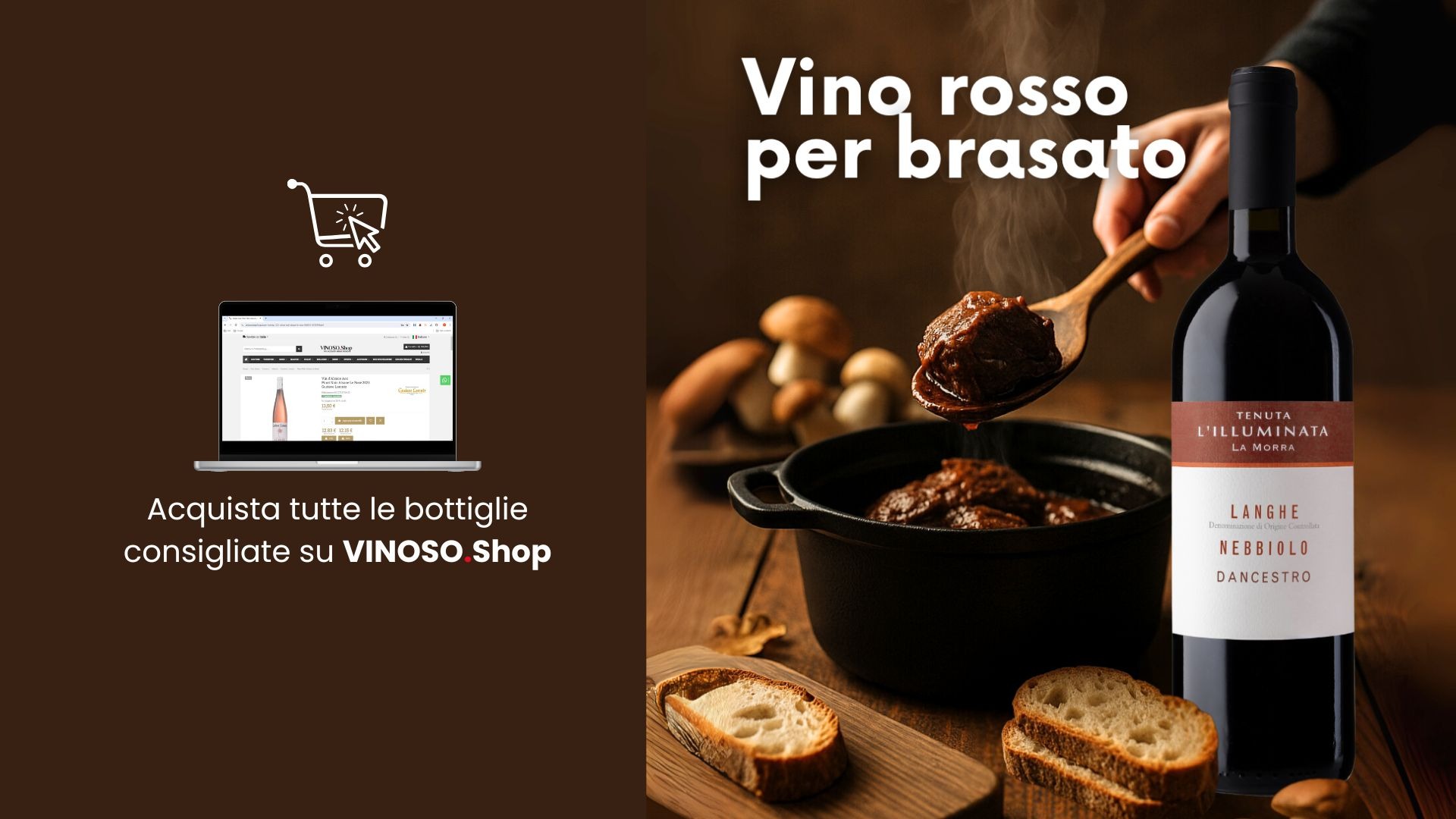
As the season turns cooler, braised beef takes center stage again. Choosing the right red wine for braised beef is no small detail: the right glass—in the pot and at the table—changes texture, aromas, and overall satisfaction.
On Vinoso.shop you’ll find labels perfect for classic Piedmontese brasato and for regional variations.
Ideal Traits of Red Wine for Braised Beef
To sustain a long cook you need structure and tannins: the first gives body to the sauce, the second softens slowly until it becomes silky. Acidity keeps the dish balanced and helps cleanse the palate.
In the pot and in the glass, favor wines with good extraction and ageing potential: evolved aromas of spice, underbrush, and ripe fruit match the braising juices without overpowering them. Avoid wines that are too light: they risk disappearing in the cook and feeling thin at the table.
Infographic (table): Ideal Traits of Red Wine for Braised Beef
Relative values on a 1–5 scale for three key parameters: Tannins, Body, and Acidity. Indicative data for a quick comparison among recommended styles.
| Wine | Tannins (1–5) | Body (1–5) | Acidity (1–5) | Usage notes |
|---|
| Barolo |
4.6 |
4.5 |
3.4 |
A classic for richly sauced braises; high extraction and long cooks. |
| Barbaresco |
4.2 |
4.1 |
3.6 |
Great with mushrooms and herbs; a leaner, tauter profile. |
| Chianti Classico |
3.7 |
3.7 |
4.0 |
Flavorful but not over-the-top braises; excellent acid balance. |
| Brunello di Montalcino |
4.4 |
4.6 |
3.5 |
For deep reductions and richer cuts; breadth and persistence. |
| Lagrein |
3.8 |
4.2 |
3.2 |
Dark, spicy profile; excellent with polenta and mushrooms. |
| Scale 1–5: indicative values for comparison. Adjust your choice to the dish’s intensity and the recipe. |
Italian Red Wines Perfect for Braised Beef
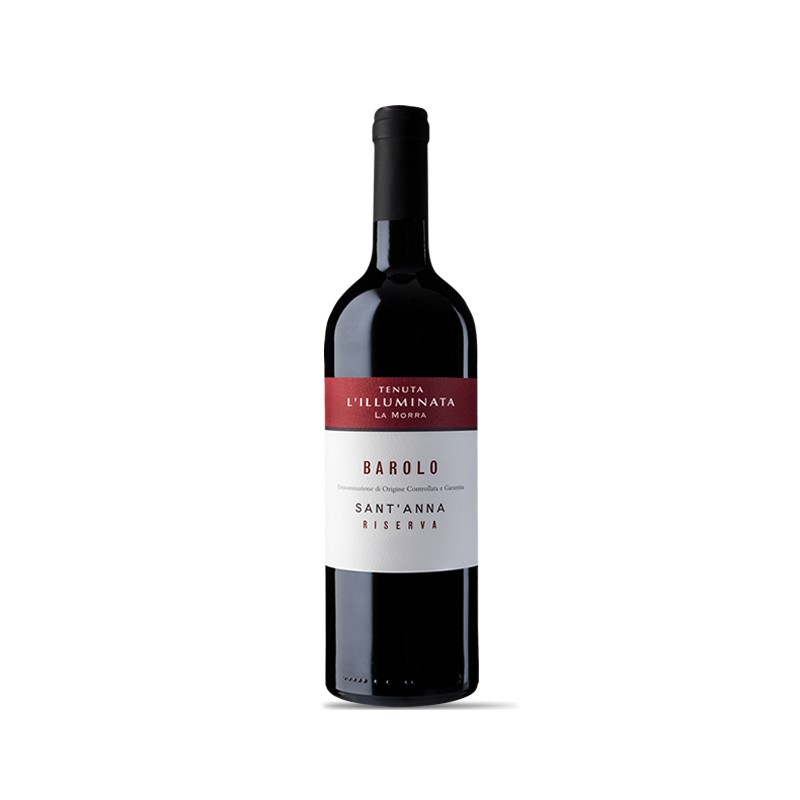
Barolo
The classic benchmark: densely woven tannins, great structure, and complex aromas. In the pot, Nebbiolo brings depth to the sauce; in the glass, it accompanies rich cuts with elegance. Choose ready-to-drink vintages or labels capable of ageing in bottle for greater finesse.
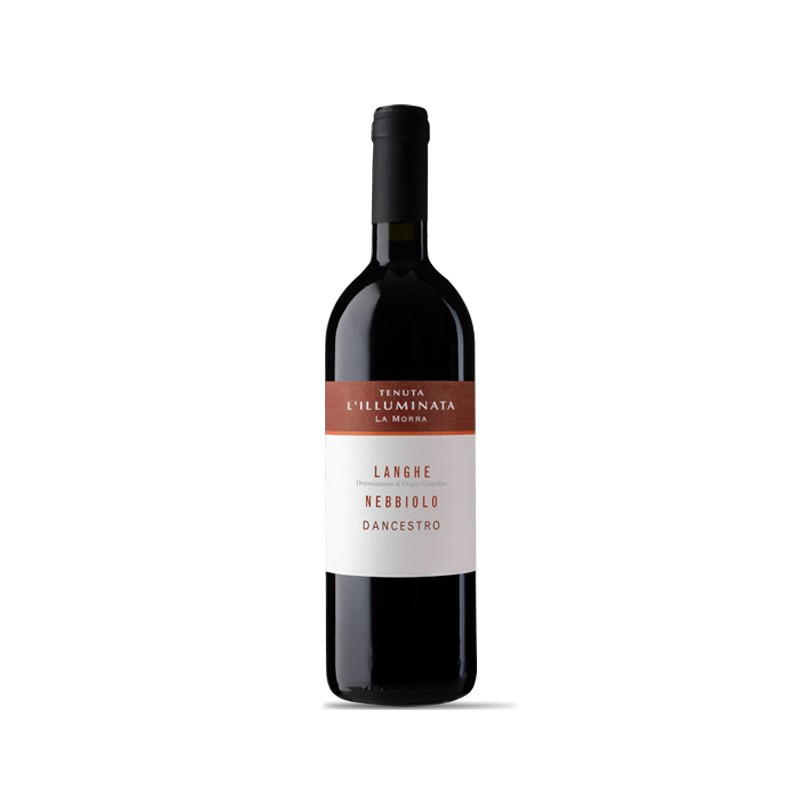
Barbaresco
Leaner than Barolo but from the same Nebbiolo grape. The lively acidity balances the fat of the meat and keeps the sip taut. Excellent when the braise includes mushrooms or aromatic herbs.
Chianti Classico
Sangiovese brings acidity and length, useful for braises with flavorful sauces. Notes of cherry and gentle spice add clarity to the dish. Favor versions with adequate ageing to integrate the tannins.
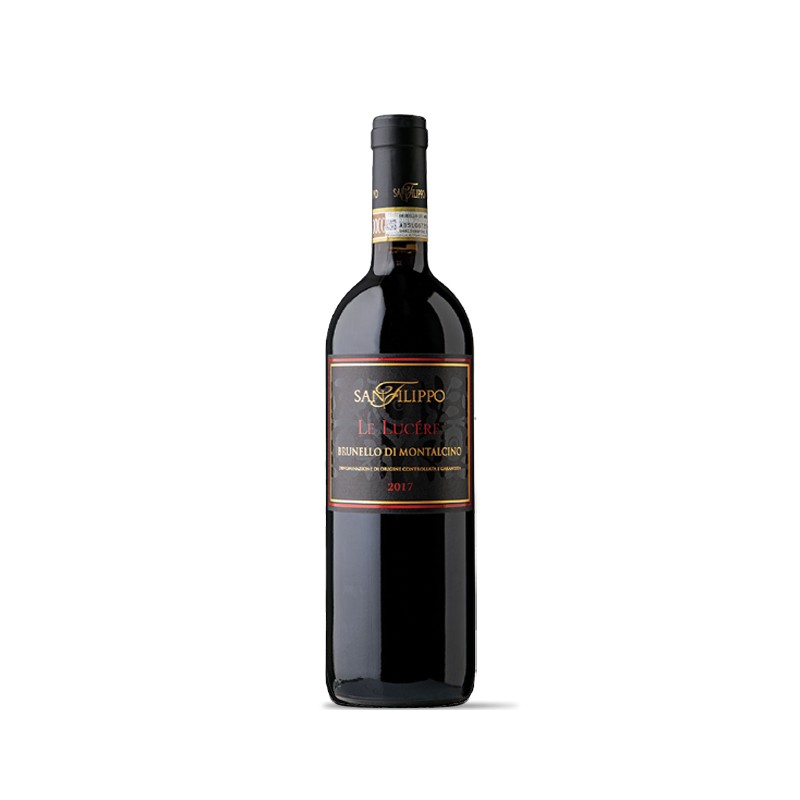
Brunello di Montalcino
When the preparation is especially rich, Brunello delivers breadth, persistence, and complexity. Its full body and chiseled tannins meld with long cooks and deep reductions.
Other Recommended Wines
Lagrein for darker, spicier nuances; Aglianico when you need firm tannic grip and structure; Montepulciano d’Abruzzo for balance and roundness. All work well both in cooking and alongside the finished dish.
Braised Beef and Seasonality: Mushrooms, Chestnuts, and Autumn Pairings
With porcini mushrooms, wines with earthy, spicy profiles shine: Barbaresco and Lagrein work very well. If chestnuts or polenta are on the plate, go for reds with ripe fruit and polished tannins to keep the mouthfeel plush.
For complete autumn dinners, use the same wine in the recipe and in the glass: continuity between pot and pour creates a through-line that makes the dish feel more harmonious and the tasting more coherent.
Red Wine for Braised Beef: Practical Buying Tips
For cooking, choose reliable bottles in the mid-to-upper range: a correct, consistent wine avoids flat results. For serving, aim for labels with greater ageing capacity to achieve more layered aromas.
On Vinoso.shop, filter by structure, alcohol, and style: check tasting notes and consider a couple of extra bottles if the braise is for an important lunch. Better a spare than an empty glass.
Conclusion
The best red wine for braised beef combines structure, ripe tannins, and well-judged acidity. Starting with Barolo, Barbaresco, Chianti Classico, Brunello, and alternatives such as Lagrein or Aglianico, you can create memorable autumn pairings. Choose labels that can age and keep coherence between the wine in the recipe and the wine in the glass.
FAQ on Red Wine for Braised Beef
Which wine should I use for stracotto? ▶
A very slow braise benefits from structured reds with firm tannins that can soften over low heat. Barolo, Aglianico, or Brunello are solid choices; Chianti Classico is also valid if you want more freshness.
What’s the difference between brasato and stracotto? ▶
Both are slow-cooked beef preparations. In brasato the meat is usually seared and cooked in plenty of wine; stracotto pushes cooking times even further with a more concentrated sauce. The principle for choosing wine is similar: structure, tannins, and balanced acidity.
Which wine is most similar to Barolo? ▶
By grape and style, Barbaresco is the closest relative (same Nebbiolo, often a touch finer and earlier-drinking). In terms of structure, Aglianico del Vulture or Sagrantino can come close, though with different aromatic profiles.

 Italiano
 English