
Your cart
There are no more items in your cart
 Italiano
 English
- Felipe Arosio
- News
- 247 views
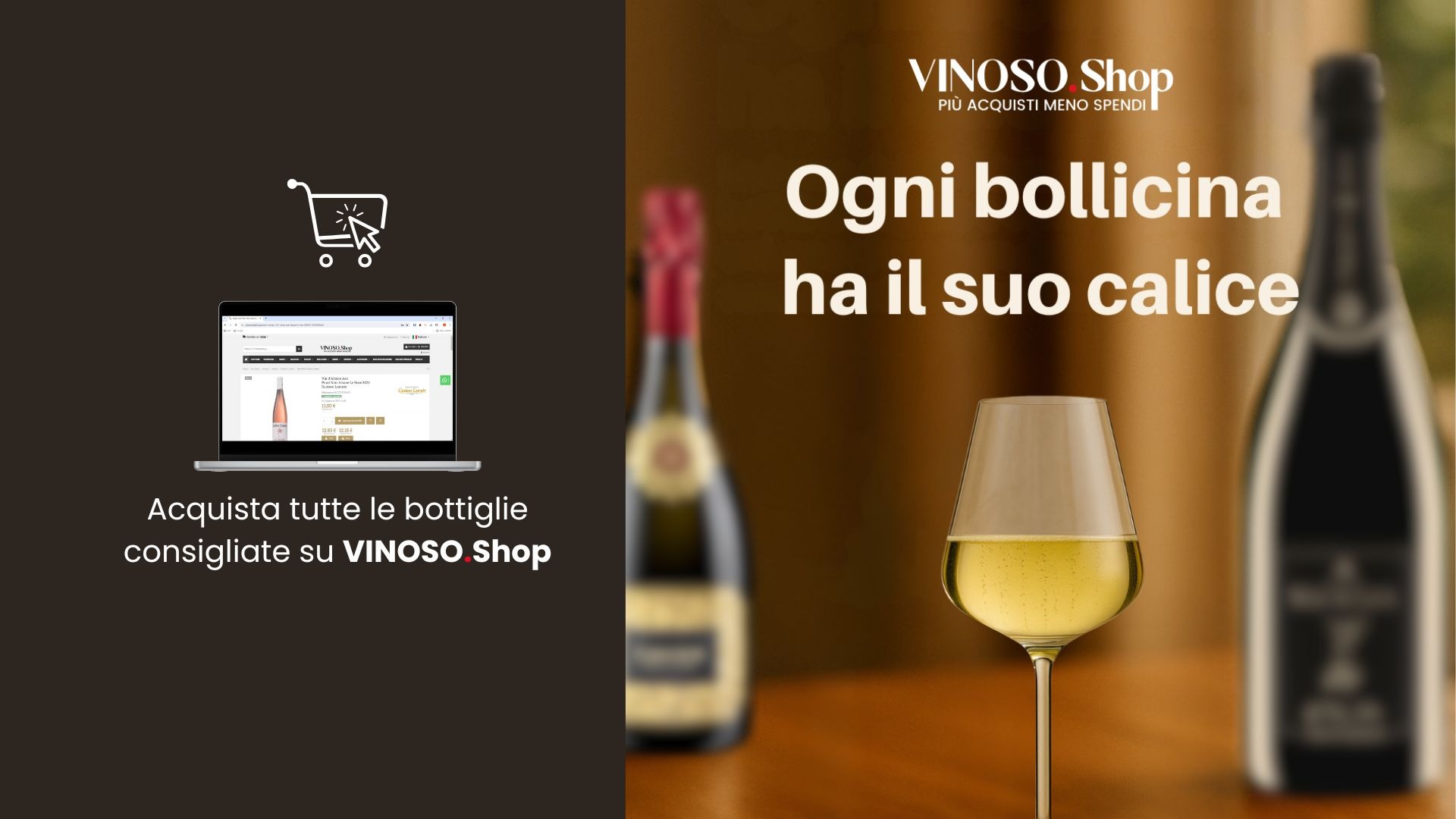
Every bubble tells a story, and the glass is its stage. Choosing the right glass isn’t just an aesthetic detail; it’s essential to appreciate a sparkling wine at its best. From production method to serving temperature, each factor affects bubble quality and aromatic intensity. In this guide we’ll see how different glass shapes — flute, tulip, and coupe — can completely change the tasting experience. We’ll also look at how temperature, shape, and glass material influence bubble persistence, and how to pick the right stemware for any occasion, from an elegant toast to a casual aperitif. The tips follow good tasting practices and the guidelines of producers featured on Vinoso.Shop, where you can find high-quality Champagne, Franciacorta, Cava, and traditional-method sparkling wines.

Why Sparkling Wine Glasses Really Matter
With sparkling wine, the first thing you notice is the finesse of the bubbles. But the shape of the glass directly influences how the perlage develops and how aromas reach your nose. The right glass not only enhances the bouquet but also regulates how quickly carbon dioxide is released from the wine.
A flute, for example, allows bubbles to rise slowly and maintain a compact ring of foam; a tulip, wider in the bowl and slightly narrower at the rim, encourages controlled oxygenation and a richer aromatic perception. For younger sparklers (e.g., Charmat/ Martinotti method) the flute is often ideal; for more complex Champagne and Italian traditional-method wines, the tulip lets you appreciate their layers and depth.
How Bubbles Tell the Wine’s Story
Bubbles are born during the second fermentation: with the Traditional Method it takes place in bottle with time spent on the lees (months or years), developing complexity and notes of bread crust; with the Martinotti/Charmat Method it occurs in pressurized tanks, emphasizing freshness and immediacy. The grain of the perlage is indicative: the finer and more regular it is, the more it suggests careful aging and stability.
Useful technical detail: many modern glasses feature a nucleation point etched on the bottom (a micro-engraving) that promotes a steady stream of bubbles, improving the duration and order of the perlage.
Glasses for Bubbles: What to Choose and Why
| Glass | Pros | Cons | When to use it |
|---|---|---|---|
| Flute | Keeps temperature; vertical, persistent perlage; sleek aesthetics. | Less aromatic openness; compresses complexity. | Young, fragrant sparklers (Charmat; lean extra dry/brut styles). |
| Tulip (champagne glass) | Balance between perlage and bouquet; controlled oxygenation; very versatile. | Requires attentive service to avoid warming. | Champagne, Franciacorta, Cava, traditional-method wines aged on lees. |
| Coupe | Visual impact; convenient for cocktails. | CO₂ disperses quickly; aromas less focused. | Sweet sparklers/ showy aperitifs; signature cocktails. |
Sparkling Glasses & Temperature: The Winning Combo
Over-chilled wine suppresses aromas and slows CO₂ release; too warm and it loses fizz quickly, tasting flat. Practical guidelines:
- Young/aromatic sparklers: 6–8 °C (flute or narrow tulip).
- Structured traditional-method: 8–10 °C (tulip).
- Sweeter/softer dosage: 7–9 °C (flute; coupe for visual flair).
Choose thin glass (crystal/sonorous, lead-free) and hold the stem to avoid warming. An ice-and-water bucket keeps temperature stable between pours.
Practical Ideas: Stemware Sets & Smart Purchases
An essential kit to cover (almost) everything: a modern flute with an etched nucleation point and a universal tulip. With these two shapes you can taste from fruity Charmat wines to more evolved traditional-method styles. Find perfect bottles for side-by-side tests on Vinoso.Shop:
- Charles Heidsieck — Brut Réserve (Champagne: complexity and finesse).
- Monte Rossa — Brut Nature “Coupé” (Franciacorta: dry, focused style).
Handy accessories: ice bucket, ice tongs, wine thermometer, and a microfiber cloth to polish glasses (avoid residues that interfere with nucleation).
Conclusion: Choose Sparkling Glasses Wisely
Every detail — shape, thickness, nucleation point — helps showcase the winemaker’s work. The tulip excels with complex, structured wines; the flute is ideal for young, lively bubbles; the coupe remains a scenic choice (or for sweets). Pick glasses to match the style and complete the setting with quality bottles: on Vinoso.Shop you’ll find a curated selection of Italian and international sparklers ready for special moments. With clean glasses, correct temperature, and a gentle pour, you can enjoy an authentic, refined experience at home, too.
Note: guidance based on service best practices and producer tech sheets; always check the label or product page for specific temperatures.