
Your cart
There are no more items in your cart
 Italiano
 English
- Felipe Arosio
- News
- 83 views
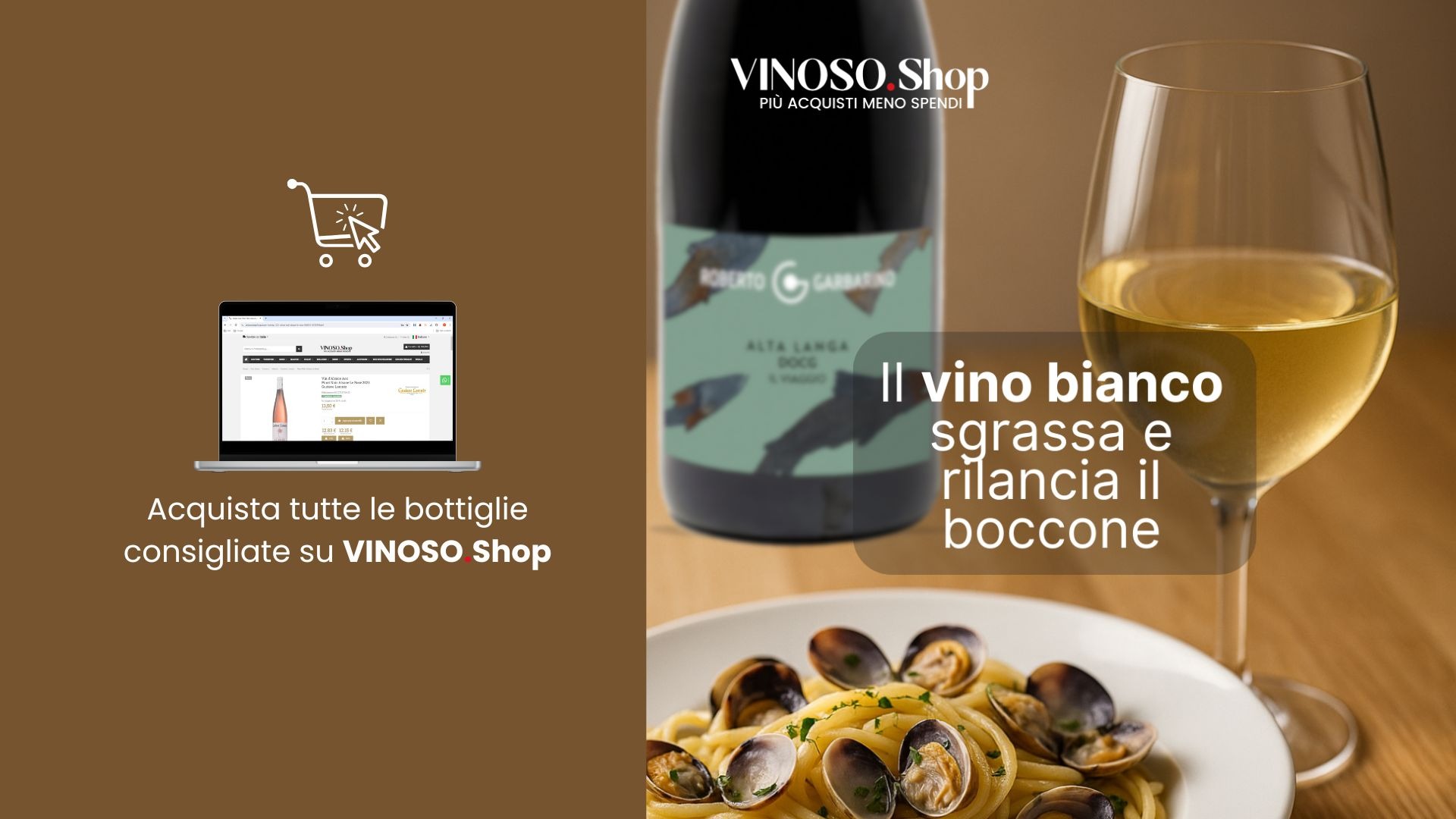
A steaming plate of spaghetti with clams or a creamy seafood risotto calls for the right glass: wines for fish don’t just “go well” with the recipe—they make it clearer, tastier, and more satisfying.
In this guide we focus on winter seafood first courses and select bottles you can actually buy on Vinoso.Shop. We’ll use simple criteria—freshness, salinity, aromatic profile—and indicate temperatures and glassware for impeccable at-home service.
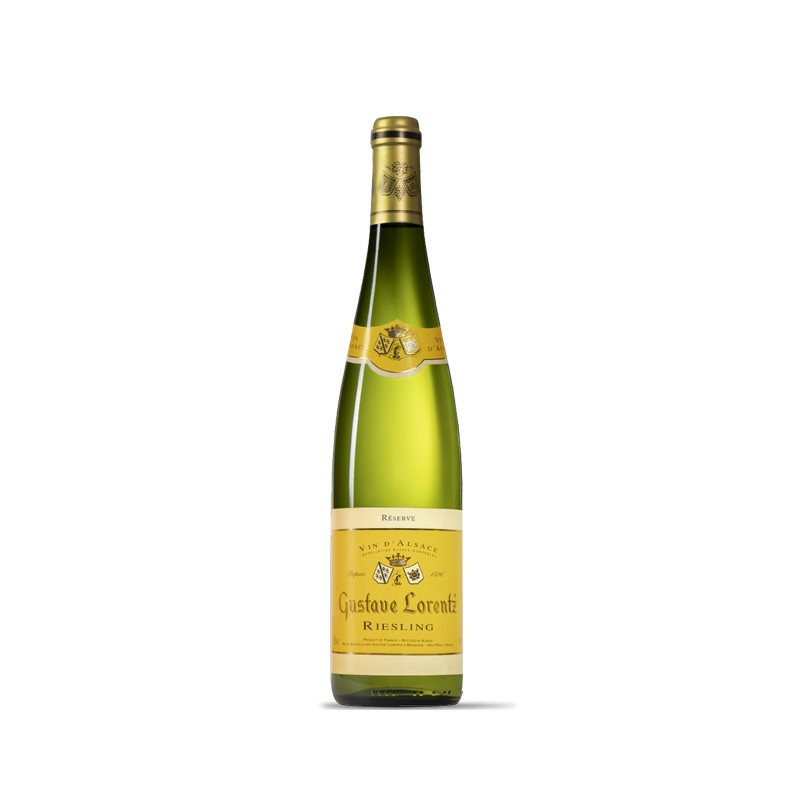
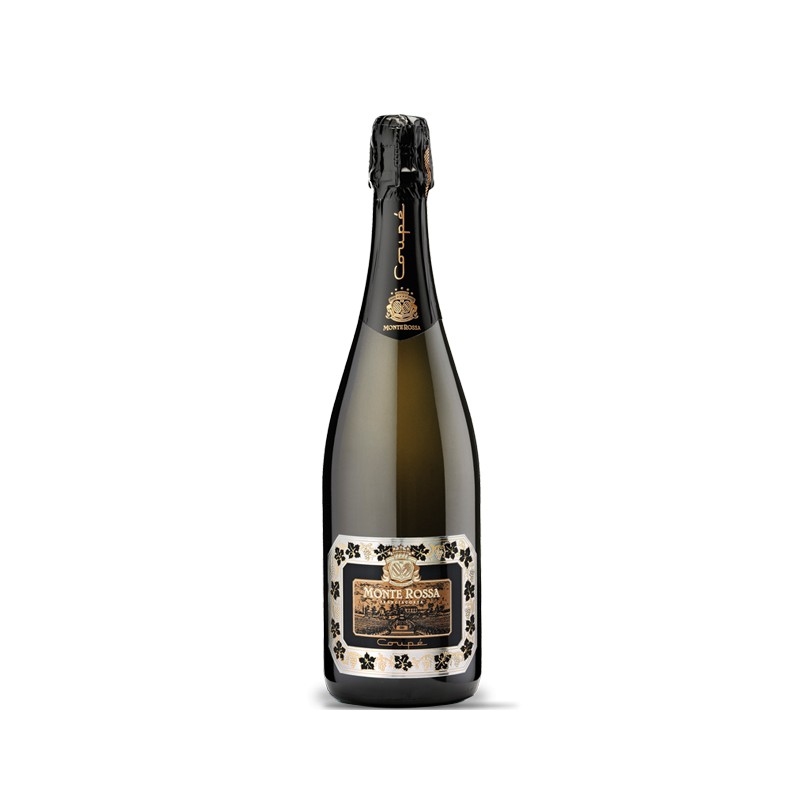
The Basics of Pairing Wines with Fish
Why White Wine Is Often the Best Choice
Fish brings delicacy, marine salinity and, often, a slight natural sweetness: that’s why a dry, fresh white acts as a palate cleanser, cutting through richness and setting you up for the next bite without masking aromas. Acidity tidies up the creamy textures of risottos, while minerality supports the persistence of shellfish and mollusks.
If the seasoning ramps up—garlic, chili, crustacean reductions—you’ll need a more structured white or a Metodo Classico with fine bubbles.
When to Choose Dry Rosés or Very Light Reds
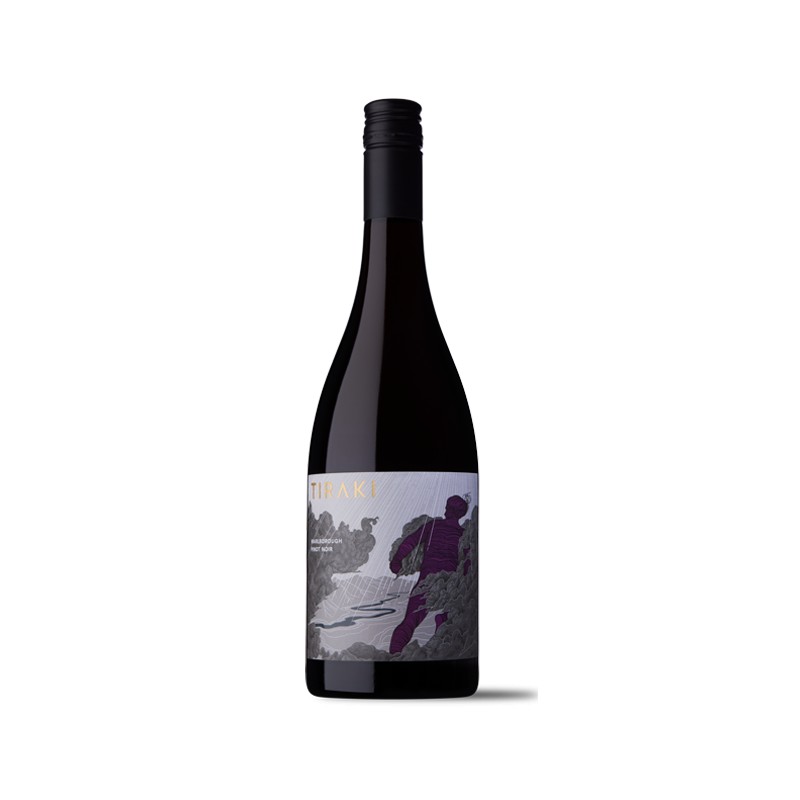
It’s not a dogma: with grilling, tomato, or light smokiness, a dry rosé with good salinity can add rhythm without weighing things down. Some very light, low-tannin reds—served cool—can work with savory sauces and meaty mollusks.
The key is to avoid marked tannin, which clashes with fish’s natural sweetness. Alternatively, a well-aged Metodo Classico adds drive and cleanliness with fine bubbles, perfect for cutting richness and supporting the bite.
Infographic — Wines for Fish: Winter Pairing Table
Infographic — “Wines for Fish: Winter Pairing Table”
| Dish | Main wine (dry/mineral white) | Alternative (dry rosé or Metodo Classico) |
|---|---|---|
| Shellfish (lobster, scampi, prawns) | Vermentino / Sauvignon with citrusy, saline profile | Metodo Classico dry, fine perlage |
| Creamy seafood risotto | Coastal white with more structure (sur lie / marine) | Dry rosé saline and linear |
| Seafood soup/cream, cacciucco | Dry/mineral white taut and clean | Metodo Classico dry or Rosé dry |
| Serving temperature | Whites: 8–12 °C (leaner 8–10 °C; more structured 10–12 °C) | Rosé: 10–12 °C • Metodo Classico: 6–8 °C |
| Glass type | Medium tulip (whites); medium-wide for more structured whites | Generous flute/Tulip (Metodo Classico) • Medium tulip (rosé) |
| Key aromatic notes | Citrus, herbs, marine minerality, slight creaminess | Bread crust, white flowers (MC) • Crunchy red fruit (rosé) |
| Palette: cool (blues/greys) with sand accents #E9D8B4 • Icons:
| ||