Elegant aperitivo wine: why Chianti works
Kicking off the evening in style: the elegant aperitivo wine
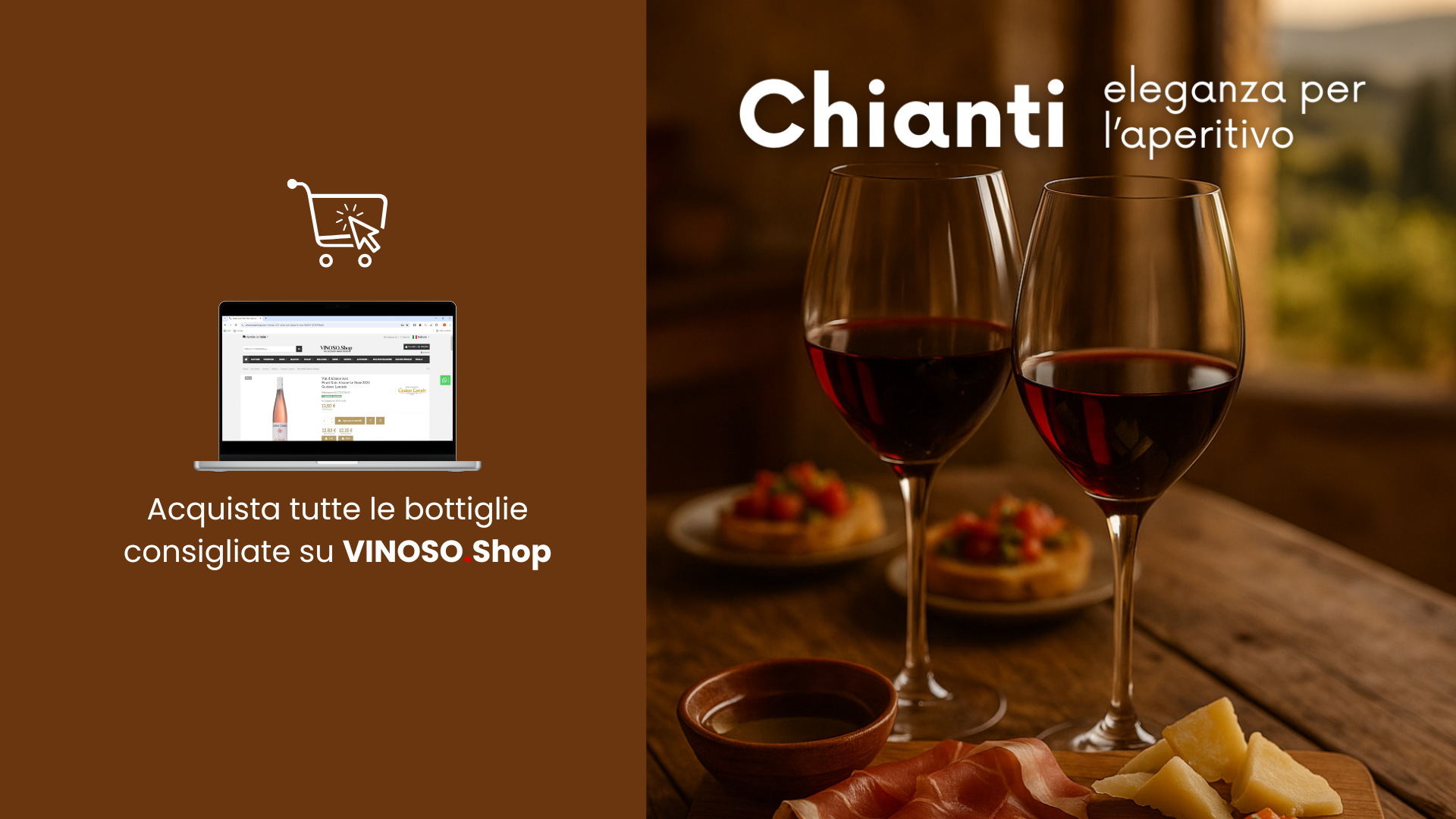
A good aperitivo is recognized by how effortlessly it invites the first sip. Among the most convincing options, the elegant aperitivo wine finds a reliable ally in Chianti: clear aromas, crisp freshness, and a gastronomic profile that naturally pairs with finger food and small bites.
Chianti wine: Tuscan elegance in the glass
Chianti is born from a clear identity: predominance of Sangiovese, notes of cherry and violet, fine tannins, and an acidity that cleanses the palate. These features, combined with measured structure, make Chianti an elegant aperitivo wine capable of enhancing flavors without overpowering them.
Elegant aperitivo wine: history and identity of Chianti
What kind of wine is Chianti: what to expect
Chianti is a Tuscan red based on Sangiovese (often pure or with small portions of other authorized varieties), ruby in color, with immediate red-fruit and floral aromas, and an easy-drinking character that also suits the start of a meal. Its lively acidity supports the aperitivo and prepares you for the courses to follow.
Why the wine is called Chianti: a recognizable terroir
The name Chianti points to the historic Tuscan area it comes from. Geography, soils, and climate have shaped a precise style that consumers now recognize and search for online. At aperitivo this sense of place becomes a story: a glass that brings the essence of the Tuscan countryside with it.
Chianti is a still wine: elegance and drinkability
Yes: Chianti is a still wine. This is exactly why it shines at aperitivo when the aim is curated yet unobtrusive. Served slightly cooler than usual (14–16 °C), it shows its best fruit and lift, staying elegant and convivial.
Tasting the elegant aperitivo wine: Chianti in detail
Color and aromas of Chianti: the first impression
In the glass, Chianti appears a lively ruby. On the nose come cherry, morello cherry, and violet, with hints of dried herbs and subtle spice. This profile makes Chianti an elegant aperitivo wine because it speaks a clear, harmonious language.
Taste and texture: freshness, fine tannins, and easy drinking
On the palate, freshness leads, supported by delicate, well-ordered tannins. The savory length invites a second sip and precisely accompanies aperitivo bites without saturating the palate.
Aging, not heaviness: how to read evolution in the bottle
Chianti gains nuance with a few months of bottle age while maintaining agility and clarity. The goal isn’t power but definition: a balance that elevates the convivial dimension of aperitivo.
Pairings for the elegant aperitivo wine: Chianti and small plates
Essential boards: delicate cold cuts and soft cheeses
With sweet prosciutto, mild finocchiona, and young pecorino, Chianti marries saltiness and richness while keeping each bite clean. The result is instant balance—perfect for starting the evening.
Finger food and vegetarian bites: rhythm and lightness
Tomato bruschetta, grilled vegetables, crostini with mushroom or legume pâté pair with Chianti’s freshness. Its drinkability supports a varied tray without creating harsh contrasts.
Mediterranean cuisine: herbs, good olive oil, and precision in the glass
Olives, anchovies, grain salads, and aromatic herbs converse with Chianti’s acidity. The whole stays fine and pleasant—ideal for long aperitivi with friends.
How to choose an elegant aperitivo wine online: the Chianti focus
Labels and styles: navigating the options
When you’re looking for a Chianti for aperitivo, favor labels with an agile profile centered on fruit and freshness. Clear technical sheets and concise tasting notes help you pinpoint the right wine for your aperitivo style.
Serving temperature and glassware: details that matter
Serve at 14–16 °C and use a medium tulip glass: this keeps the aromas crisp and the sip streamlined. If the wine has been cellared cool, a few minutes at room temperature is enough to reach the ideal balance.
Buying on Vinoso.shop: quality and a guided experience
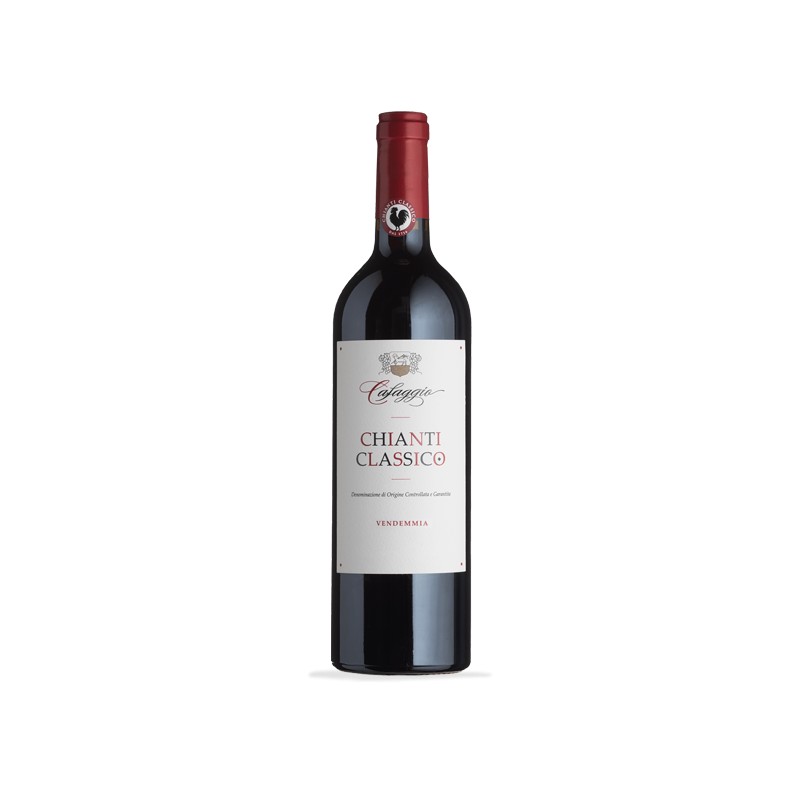
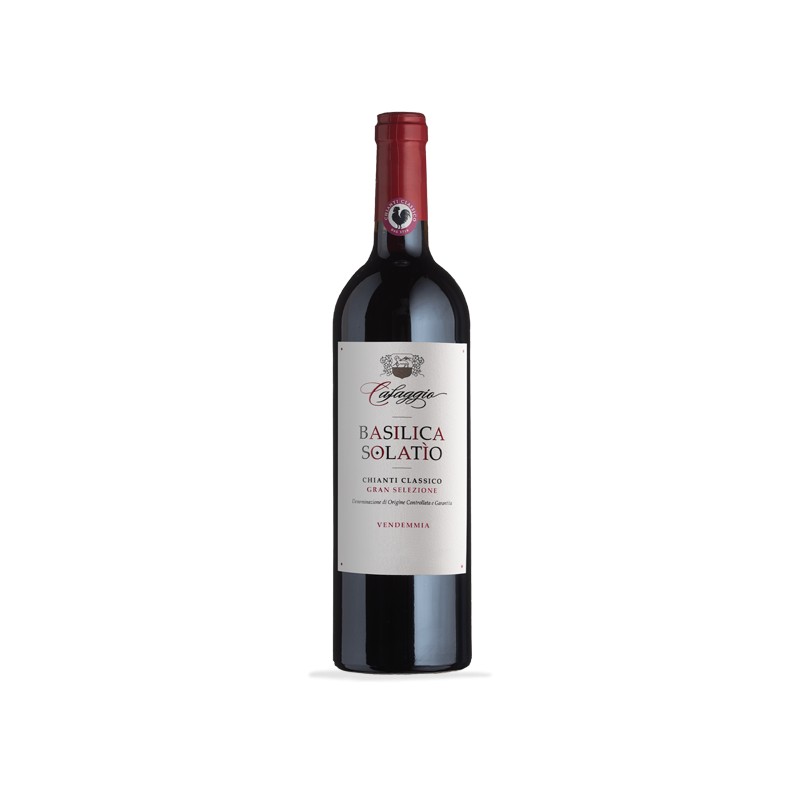
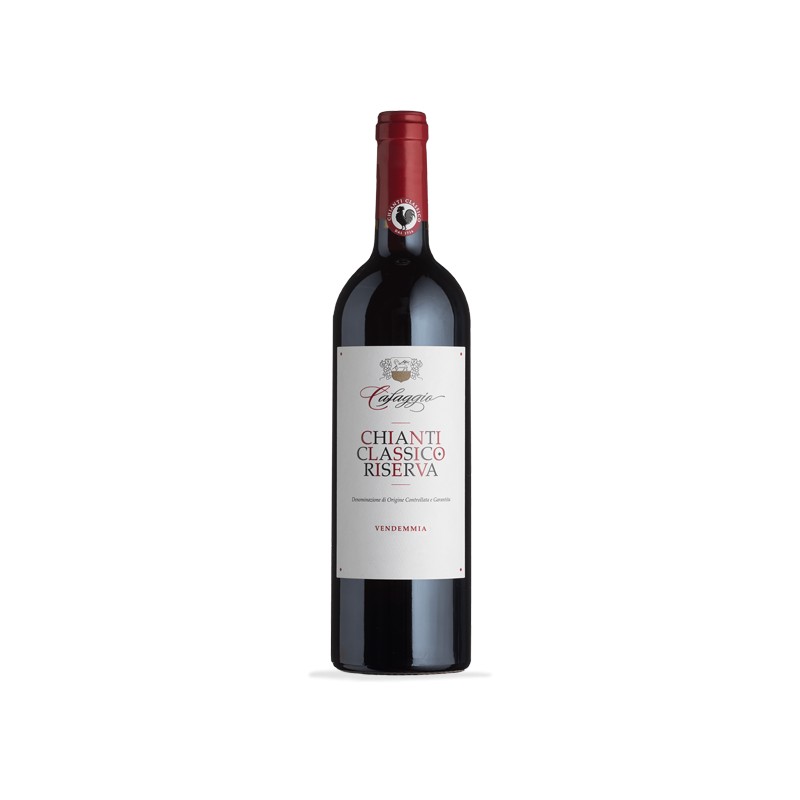
The dedicated Cafaggio brand page on Vinoso.shop provides a reliable starting point: curated products, essential descriptions, and fast shipping. If you like to complete the experience, Cafaggio Sangiovese Grappa is also available—perfect as a digestif.
Infographic: Quick guide to elegant aperitivo wine – Chianti
Three summary blocks: sensory profile, temperature & glass, recommended pairings. Sensory scale 1–5.
| Block | Item | Value | Indicator |
|---|
| Sensory profile |
Cherry / sour cherry |
4/5 |
|
| Sensory profile |
Violet / floral |
3/5 |
|
| Sensory profile |
Freshness / acidity |
4/5 |
|
| Sensory profile |
Tannin (fineness) |
2/5 |
|
| Temperature & glass |
Serving temperature |
14–16 °C |
Serve slightly cooler for aperitivo |
| Temperature & glass |
Glass |
Medium tulip |
To focus aromas without constraining the sip |
| Recommended pairings |
Essential boards |
Delicate cold cuts, soft cheeses |
Balance of saltiness and fat |
| Recommended pairings |
Finger food & veg |
Bruschetta, grilled vegetables, crostini with pâté |
Freshness & drinkability |
| Recommended pairings |
Mediterranean cuisine |
Olives, anchovies, grain salads, herbs |
Palate cleansing |
| Note: sensory intensity expressed on a 1–5 editorial scale; temperatures and glassware are service tips for aperitivo. |
Conclusion: elegant aperitivo wine – Chianti everyone agrees on
When you want your aperitivo to feel curated, Chianti offers freshness, clear aromas, and a smooth sip that brings tastes together. With a few service tweaks and a focused choice of labels, Chianti becomes the elegant aperitivo wine that turns your snack table into a memorable moment. On Vinoso.shop you’ll find ideas and selected bottles to get started right away.
FAQ on Elegant Aperitivo Wine and Chianti
What kind of wine is Chianti? ▶
It’s a Tuscan red predominantly made from Sangiovese, recognizable for freshness, red-fruit and floral notes, fine tannins, and excellent drinkability.
Why is the wine called Chianti? ▶
Because it comes from the Tuscan area historically called Chianti: the bond between territory and style has made the name a benchmark for enthusiasts.
Is Chianti a still wine? ▶
Yes, Chianti is a still wine. It performs best at aperitivo when served slightly cooler than the canonical temperature for reds, between 14 and 16 °C.

 Italiano
 English