
Your cart
There are no more items in your cart
 Italiano
 English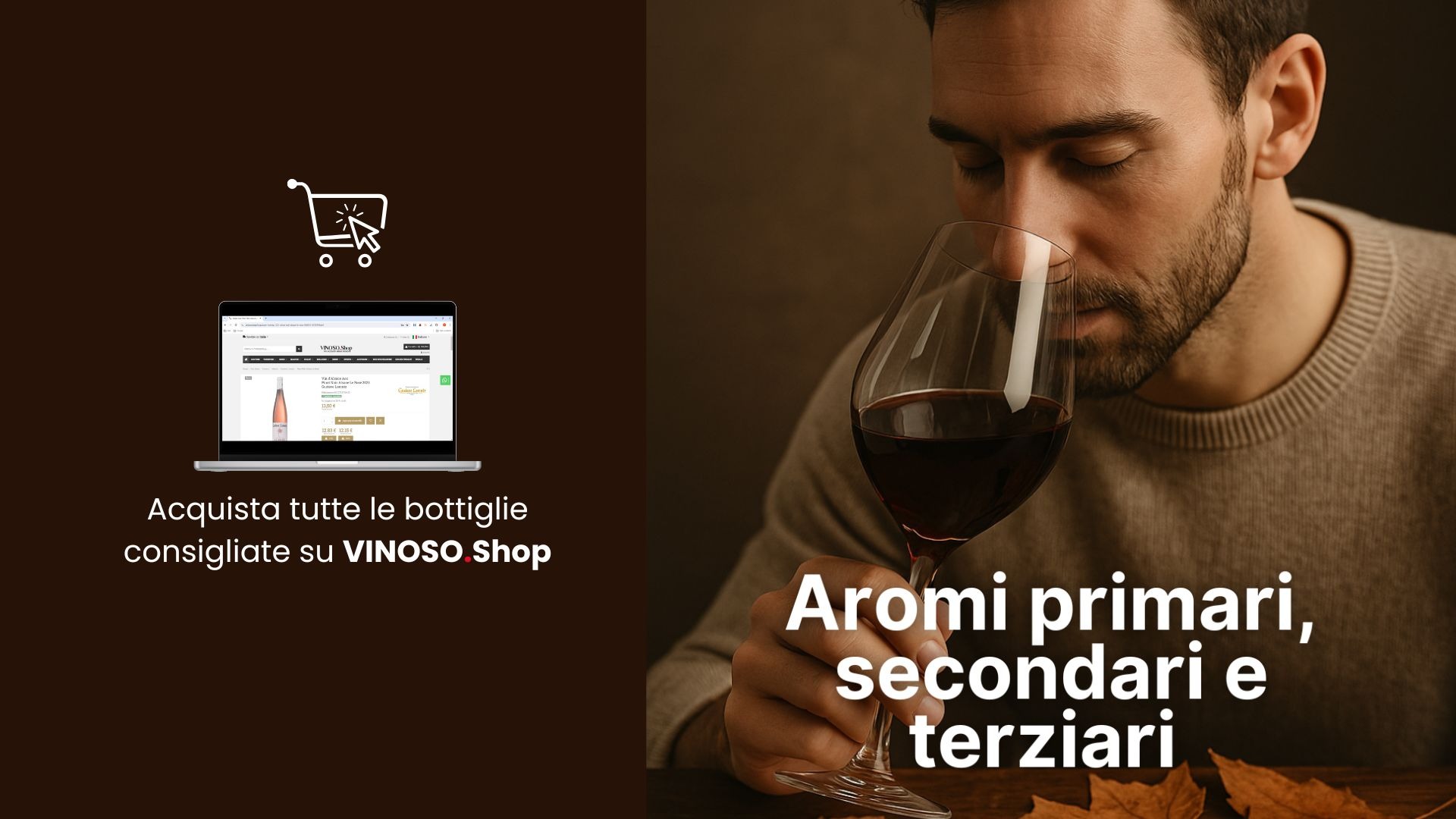
Autumn Scents: From the Woods to the Glass
Before every sip, there’s a journey through the nose: wine aromas tell the story of the land, the grape variety, and the winemaking process long before the liquid reaches the palate. In autumn, these scents seem to expand—dark fruits, forest floor, spices, and balsamic notes create a natural harmony with seasonal cuisine. This guide starts from the basics and moves toward practical, shoppable advice: links to Vinoso.Shop product pages let you move from words to glass in just a few clicks, avoiding generalities and focusing on wines with a clear identity. The goal is to offer simple, useful language to recognize what you smell, understand how aging shapes the profile, and choose bottles that match dishes, temperature, and setting. The result? A more mindful—and above all, more enjoyable—experience.
What Are Wine Aromas?
Wine Aromas: Primary, Secondary, and Tertiary Explained
At the core are primary aromas, tied to the grape variety (fruits, flowers, herbs). During fermentation, secondary aromas emerge: yeast tones, bread crust, riper fruit, and sometimes dairy or spicy notes formed through cellar reactions. Over time and with proper aging, tertiary aromas appear: forest floor, leather, sweet tobacco, fine spices, roasted hints, and balsamic notes. These aren’t “better” stages, but rather layers that build upon one another. The ideal balance keeps the fruit recognizable while adding depth and complexity. Knowing where an aroma fits helps you interpret the label and decide when to uncork for maximum expression.
Wine Aromas vs. Bouquet: How Not to Confuse Them
“Aromas” refer to individual scents perceived by the nose; “bouquet” describes the overall harmony of those aromas—especially those that evolve through aging. A young wine can have vivid aromas but a simple bouquet; a bottle with a few years often reveals a richer, more integrated bouquet, where fruit, spice, and toastiness blend seamlessly. Understanding the difference makes choosing the right glass for the evening much easier.
Wine Aromas and Seasonality
Autumn Aromas in the Glass: Woods, Spice, Balsamic Touches
In autumn, we crave wine aromas reminiscent of the forest: small dark berries, light humus, mushrooms, dry leaves; then elegant spices—pepper, cinnamon, clove—and refreshing balsamic hints. A Piedmont red like Langhe Nebbiolo “Dancestro” displays red fruits and fine spice, while a well-aged Barolo adds tertiary depth. On the Tuscan coast, a Bolgheri D.O.C. Rosso combines dark fruit and light cocoa. For winter whites, a well-made Bolgheri D.O.C. Bianco offers citrus, herbs, and a saline streak that cleanses the palate. These aromas pair naturally with mushrooms, braised meats, and roasts—making your table seasonally coherent.
Spring and Summer Aromas: The Counterpoint to Autumn Scents
As temperatures rise, wines reveal brighter aromas: white flowers, yellow-fleshed fruit, and citrus in whites; crisp red berries in rosés and lighter reds. Coastal whites such as certain Vermentinos or Tuscan blends shine with seafood dishes and fresh herbs. Comparing these “aromatic seasons” helps plan menus and purchases, avoiding pairings that feel too heavy—or too thin.
How to Recognize Wine Aromas During Tasting
Practical Techniques: From Oxygenation to Breathing
To read wine aromas, start with movement: gently swirl the glass to release volatile molecules, then smell in three stages—short, medium, deep—to catch both light and darker notes. If the nose feels closed, wait a couple of minutes: oxygen organizes the profile and awakens aromas suppressed in the bottle, especially in aged reds. Avoid strong ambient or personal perfumes—they can interfere with tasting. At 16–18 °C, structured reds express themselves coherently; complex whites perform best at 10–12 °C. Writing down three key words helps anchor the experience and build your personal scent memory.
Useful Tools: Aroma Kits and Simple Sheets
You don’t need expensive tools: a tasting sheet with sections for primary/secondary/tertiary aromas and a basic set of food essences (citrus, herbs, spices) are enough to train your nose effectively. Even the yeasty tones of sparkling wines—bread crust, brioche—make for great practice: an Alta Langa such as “Il Viaggio” Blanc de Blanc is a perfect example. Try tasting again after a few minutes and notice how the bouquet evolves with oxygen—it’s a fun exercise!
Pairing Wines and Autumn Aromas
Mushrooms and Truffles: Seek Earthy and Spicy Notes
With sautéed mushrooms and white truffles, choose wines with a clean profile and gentle spice: young Nebbiolo for delicate dishes, Barolo with broader structure for richer preparations. Earthy notes balance the umami of mushrooms, while fine spice enhances truffles without overpowering them. A touch of salinity helps keep the finish fresh.
Roasts and Game: Dark Aromas, Spice, and Balsamic Depth
For roasts and game meats, pick a full-bodied red with dark fruit, mild cocoa, spices, and balsamic hints. A well-balanced Bolgheri Rosso pairs beautifully with long-cooked sauces, while its acidity keeps the sip lively. For autumn appetizers, a coastal white with citrus and herbs is perfect—it refreshes the palate and cuts through richness.
Conclusion: Train Your Nose to Choose Better
Recognizing wine aromas isn’t a mysterious gift—it’s a skill guided by a few clear rules. By working on temperature, oxygenation, and comparing well-chosen labels—preferably from Vinoso.Shop—you’ll make the bouquet easier to read and your at-home pairings more convincing. Especially in autumn, when the woods meet the glass, a simple vocabulary is enough to turn tasting into an everyday pleasure.