
Your cart
There are no more items in your cart
 Italiano
 English
- Felipe Arosio
- Mondo Vino
- 72 views
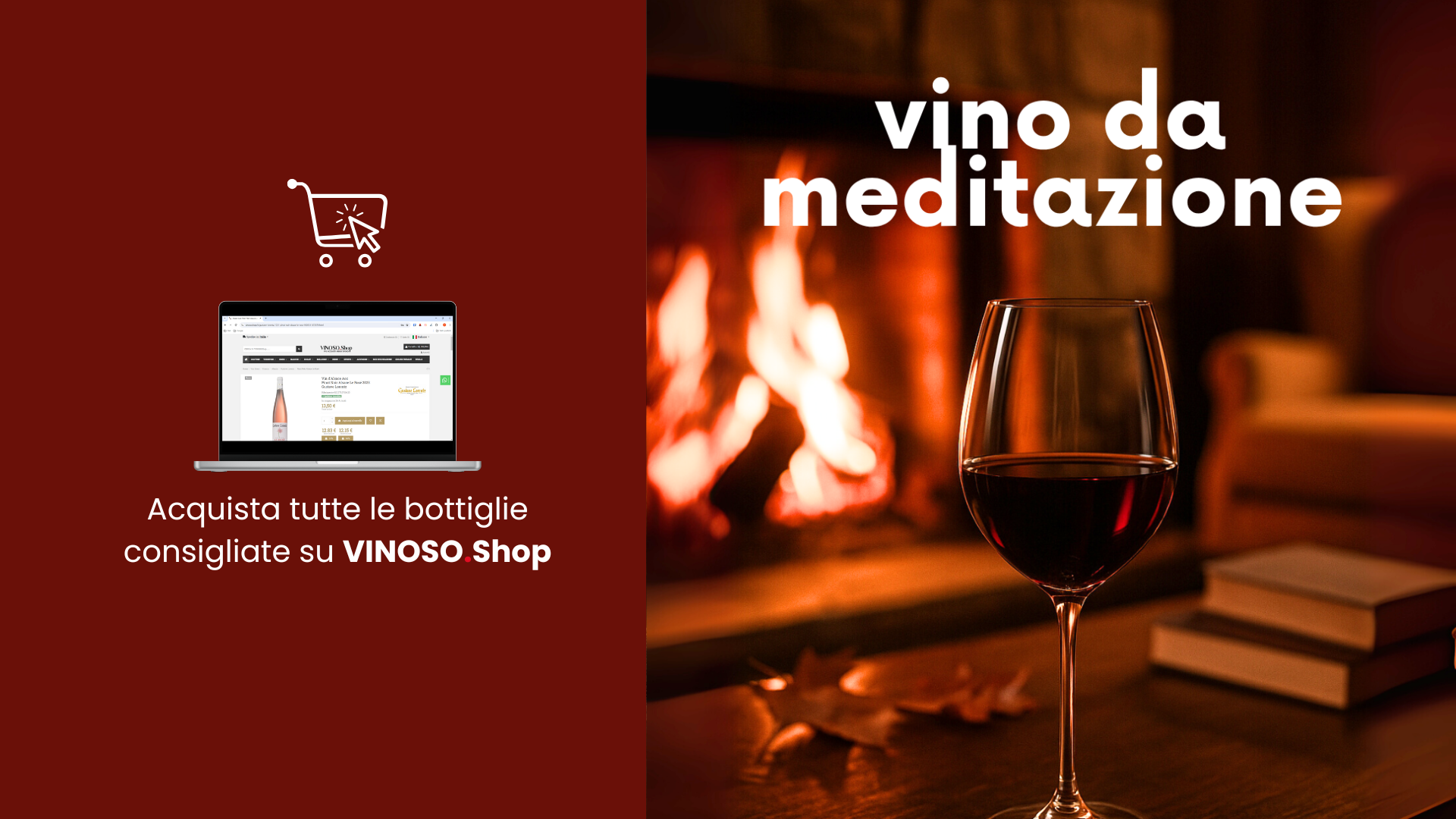
When it’s cold outside, the glass slows time down: meditation wines invite a mindful sip, focused on generous aromas and a lingering finish that fills the evening. Often full-bodied and complex, these wines are perfect companions for moments of reflection and relaxation typical of the cold season. Winter encourages us to slow down, to allow longer and deeper pauses: meditation wine suits an unhurried tasting, where every aroma and nuance emerges with intensity.
The richness and structure of these wines pair beautifully with evenings by the fireplace, intimate conversations, or immersive reading. These are labels that need time to open up, offering notes of spice, ripe fruit, and distant lands—able to transport the taster on an inner journey. What’s more, the warmth they convey in the glass contrasts with the harshness of the weather outside, creating a perfect balance between setting and tasting.
Choosing meditation wines in winter means treating yourself to an intense sensorial experience—ideal for those who love diving into detail and gradually discovering the complexity of every sip. It’s an invitation to turn a simple evening into a moment of conscious, deep pleasure, where time seems to stretch and the mind opens to new emotions.
What meditation wines are
Definition and key traits of meditation wines
First of all, “meditation wines” refers to glasses of great concentration and complexity, meant to be enjoyed on their own, without the need to pair with food.
The definition is attributed to critic Luigi Veronelli: what matters is sensory intensity, layered aromas, balance, and a long flavor trail.
In a winter setting, well-aged structured reds are natural after-dinner companions: they require attention, large glasses, and proper temperatures.
Origin of the concept according to Veronelli
The term “meditation wines” was coined to describe wines that require time and focus to be fully appreciated—establishing a true one-to-one dialogue between the enthusiast and the bottle. It’s a concept that goes beyond simple drinking, inviting a slow, reflective tasting.
Veronelli, a leading figure in Italian food and wine culture, emphasized the importance of the slow sip—able to accompany a contemplative mood that turns tasting into an intimate, personal experience. For Veronelli, meditation wines are not just beverages, but true companions for reflection, revealing their secrets only to those who know how to wait and pay attention.
This approach guides the choice of bottles best suited to quiet evenings: wines that don’t demand haste, but instead evolve slowly in the glass, maintaining a coherent, enveloping aromatic thread. They are wines that tell stories through nuance and invite a sensory journey intimately tied to time and the taster’s patience.
Infographic — “Winter meditation wines at a glance”
| Section | Item | Key details |
|---|---|---|
| Occasions | End of meal | Leisurely glasses, gentle conversation; structured, relaxed wines. |
| Occasions | After dinner | Focus on depth and aromatic length; sip slowly. |
| Occasions | Reading | Broad aromas, steady pace; avoid overly high alcohol. |
| Occasions | Conversation | Harmonic, silky profile; a bottle that evolves in the glass. |
| Sensory parameters | Persistence | High (long, consistent finish). |
| Sensory parameters | Aromatic complexity | Spice, ripe fruit, balsamic/mineral notes, layering. |
| Sensory parameters | Structure | Medium-high body; polished tannins or saline substance in evolved whites. |
| Service | Glasses | Large for reds; medium-large for evolved whites. Consider a light decant. |
| Service | Red-wine temperature | 16–18 °C (gradual opening, small sips). |
| Service | White-wine temperature | 12–14 °C (enhances volume and complexity). |
| Vinoso.Shop examples | Bolgheri Rosso / Superiore — Donna Olimpia 1898 |
Bordeaux-style blends: dark fruit, fine spice, long progression. |
| Vinoso.Shop examples | Barolo Sant’Anna Riserva — Tenuta L’Illuminata |
Characterful Nebbiolo: chiseled tannins, depth, and persistence. |
Winter meditation wines: types and styles
Structured reds to sip in peace
Let’s start with full-bodied reds: dense yet polished tannins, deep fruit, balsamic and spicy notes that unfold over time.
Practical examples you can find in our shop: Bolgheri Rosso and Bolgheri Superiore by Donna Olimpia 1898—Cabernet- and Merlot-based blends that benefit from ageing to achieve balance and length.
Another option is Barolo Riserva Sant’Anna by Tenuta L’Illuminata: a Nebbiolo with character, also presented as a meditation wine in its product descriptions—ideal for unhurried evenings and calm conversations.
Evolved whites and service method
Although winter imagery tends to favor reds, some evolved whites can deliver a contemplative experience: aromatic complexity, substance, and a savory finish that extends the sip.
Serve them slightly warmer than usual—12–14 °C—to broaden the aromatic range; choose medium-large glasses to encourage oxygenation.
How to taste meditation wines at home
Ideal occasions and service ritual
To enjoy meditation wines to the fullest, it’s essential to create a calm, gentle setting. Opt for soft lighting to accompany the evening and make sure to use perfectly clean glasses so as not to alter the aromas. Temperature must suit the wine’s style: cooler—but not cold—for full-bodied reds, and always respectful of the wine’s organoleptic profile. Tasting should be slow, giving the wine time to fully express itself.
For structured reds, pour moderate amounts into the glass to allow progressive oxygenation, revealing the more complex aromatic layers. When dealing with dense bottles with strong evolution, a short pre-decant is recommended to encourage aromatic opening and palate softness.
Meditation wines and the “Global Drink Wine Day”
An ideal occasion to taste meditation wines is February 18, widely referred to in the trade press as “Global Drink Wine Day” or the “world wine day.” At this time, many enthusiasts raise a conscious toast to wine, choosing fine bottles that call for time and attention.
While not an official institutional recurrence, the day is widely celebrated internationally with events and tastings—an excellent excuse to gather in a small group and deepen your knowledge of wines that tell intense, complex stories.
Where to buy meditation wines online
The selection on Vinoso.Shop
- Donna Olimpia 1898 — Bolgheri D.O. Rosso
- Donna Olimpia 1898 — Bolgheri Experience (incl. Bolgheri Superiore)
- Tenuta L’Illuminata — Barolo MGA Sant’Anna Riserva 2015
- Donna Olimpia 1898 — Bolgheri D.O. Rosso Magnum Gift Box
Note: availability and vintages may vary; always check the up-to-date product page.
Practical tips for choosing meditation wines
- Start with reds showing readable structure and good harmony: aim for clear persistence rather than power for its own sake.
- Consider the vintage, ageing path, and minimum bottle time: an already relaxed profile makes slow tasting easier.
- Read the technical notes: grape varieties, soils, wood management, and ageing times help you understand what to expect in the glass.
Conclusion: meditation wines, an invitation to calm
In short, meditation wines aren’t necessarily sweet: the focus is on aromatic depth, palate consistency, and the ability to keep you engaged sip after sip.
For winter, structured reds and evolved whites offer complete experiences even without complex pairings; on Vinoso.Shop you’ll find selected references to get started on the right foot.
The next step is simple: pick a bottle, dial in the service, and take the time it deserves.